
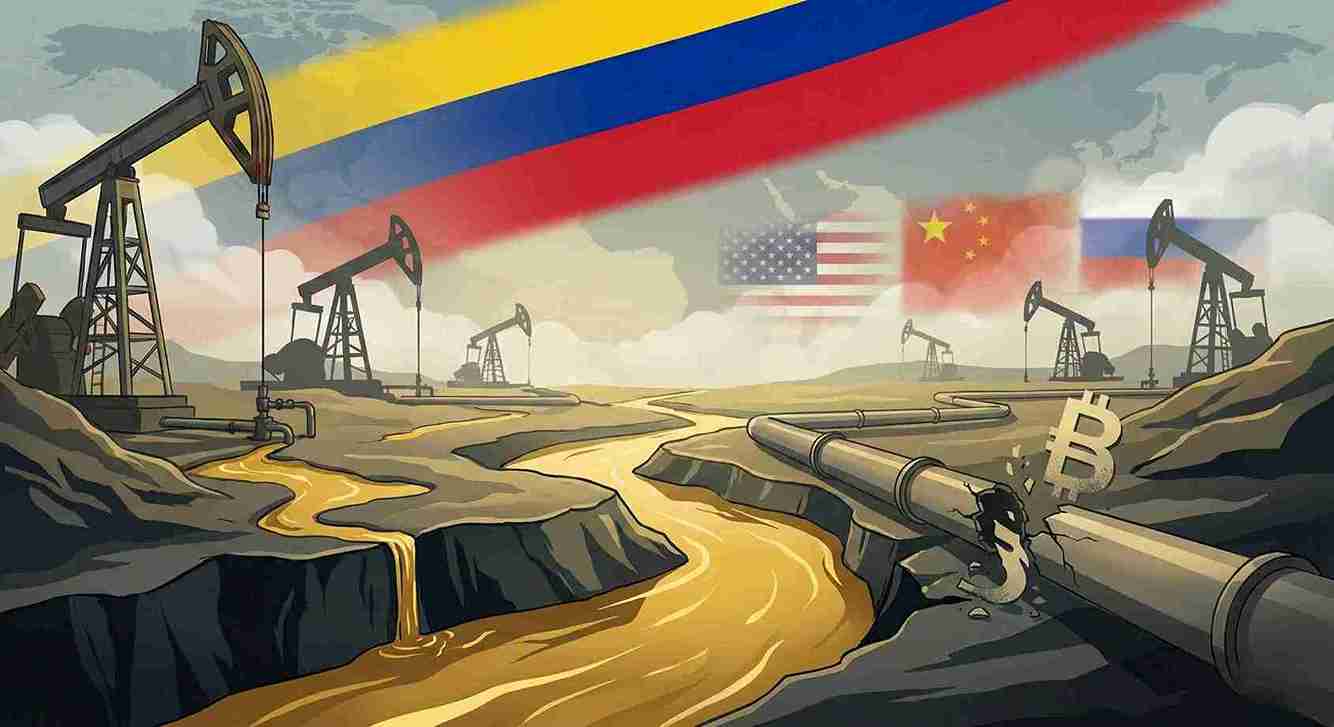
Venezuela, a nation blessed with the world's largest proven oil reserves, presents one of the most compelling paradoxes in modern economics and geopolitics. With an estimated 300 billion barrels, significantly more than Saudi Arabia, one might expect Venezuela to be a beacon of prosperity and global influence. Instead, the country has grappled with an unprecedented economic crisis, hyperinflation, and a humanitarian emergency that has driven millions to seek refuge abroad.
This blog post delves into the intricate story of Venezuela's vast oil reserves, exploring their scale, historical impact, geopolitical significance, and the profound challenges that have transformed potential wealth into a source of national tribulation. We will uncover why, for Venezuela, having the world's greatest oil wealth has not translated into widespread well-being but rather into an enduring struggle.
Unveiling the Treasure: The Scale of Venezuela's Oil Reserves
To truly grasp the magnitude of Venezuela's energy potential, one must appreciate the sheer volume of its hydrocarbon deposits. Venezuela officially holds over 300 billion barrels of proven crude oil reserves, dwarfing those of any other nation. This extraordinary figure is primarily attributed to the Orinoco Oil Belt, a vast expanse in the eastern part of the country rich in extra-heavy crude oil.
Heavy Crude and the Orinoco Belt
The Orinoco Oil Belt contains deposits of crude oil so dense and viscous that it often resembles asphalt at room temperature. Extracting and refining this heavy crude is technically more challenging and costly than lighter, conventional crude. It requires significant investment in specialized infrastructure, including upgraders that process the heavy oil into lighter, more marketable synthetic crude. Despite these challenges, the sheer volume makes the Orinoco Belt a strategic asset of unparalleled global importance.
Comparing Venezuela's Reserves Globally
To put Venezuela's reserves into perspective, consider this: its proven reserves exceed those of Saudi Arabia (approximately 267 billion barrels) and Canada (around 170 billion barrels, largely from oil sands). This positions Venezuela as a titan in terms of raw energy potential, theoretically capable of supplying global oil demand for decades. This immense wealth should, in theory, grant Venezuela unparalleled leverage in the global oil supply market and provide a robust foundation for national development.
A History Steeped in Oil: From Boom to Bust
Venezuela's destiny has been intertwined with oil since the early 20th century. The discovery of vast petroleum fields rapidly transformed a predominantly agrarian society into a petrostate, where oil revenues became the lifeblood of the national economy.
The Early Oil Era and Nationalization
Foreign oil companies initially dominated Venezuela's oil industry. However, a growing nationalist sentiment led to the nationalization of the industry in 1976 under President Carlos Andrés Pérez. This move created Petróleos de Venezuela S.A. (PDVSA), a state-owned enterprise that quickly became one of the world's leading oil companies. For decades, PDVSA was a highly efficient, technically proficient entity, generating immense wealth for the Venezuelan state and funding significant infrastructure and social programs.
Chavismo and the Socialization of Oil Wealth
The rise of Hugo Chávez in 1999 marked a pivotal shift. Chávez leveraged oil wealth to fund his "Bolivarian Revolution," expanding social programs in health, education, and housing. His administration significantly increased state control over PDVSA, using its revenues not just for investment in the oil sector but increasingly for direct social spending. This shift, while initially popular, gradually eroded PDVSA's operational independence and technical capacity. Political appointees replaced experienced engineers and managers, leading to underinvestment in maintenance, exploration, and upgrading technology. This marked the beginning of a decline in oil production Venezuela had once meticulously built.
The Geopolitical Chessboard: Venezuela's Role in Global Energy
Venezuela's colossal oil reserves have inevitably placed it at the center of complex international relations and global energy politics. Its membership in OPEC (Organization of the Petroleum Exporting Countries) and its historical position as a major oil exporter to the United States have shaped its diplomatic and economic trajectory.
OPEC Influence and International Relations
As a founding member of OPEC, Venezuela has historically played a significant role in influencing global oil prices and production quotas. Its substantial reserves give it a theoretical weight within the organization, though its diminished production capacity in recent years has reduced its practical influence. Venezuela's relationships with other oil-producing nations and major energy consumers are often dictated by its hydrocarbon endowments.
U.S. Sanctions and Their Far-Reaching Effects
Since 2017, the United States has imposed a series of escalating economic sanctions on Venezuela, targeting its state oil company PDVSA, key government officials, and financial transactions. These sanctions, aimed at pressuring the Maduro regime, have severely impacted Venezuela's ability to sell its crude oil on international markets, access crucial diluents needed for its heavy crude, and obtain the necessary equipment and foreign investment for its ailing oil infrastructure. The impact on global oil supply, while initially considered minimal due to Venezuela's declining output, remains a point of geopolitical tension, especially concerning potential future supply shocks.
The Economic Fallout: Why Reserves Don't Guarantee Prosperity
The stark reality for Venezuela is that its immense oil wealth has not translated into sustained national prosperity. Instead, the country faces a deep and protracted economic crisis Venezuela is struggling to overcome, marked by a dramatic decline in living standards.
Decline in Production Capacity
The most direct consequence of mismanagement and underinvestment has been the catastrophic decline in Venezuela's oil production. From a peak of over 3 million barrels per day (bpd) in the late 1990s, production plummeted to historical lows, at times falling below 400,000 bpd. This collapse is due to a combination of factors: aging infrastructure, lack of maintenance, insufficient technical expertise following significant brain drain, and the crippling effect of U.S. sanctions preventing access to crucial markets and equipment. The nation's ability to leverage its venezuela oil reserves has been severely hampered.
Hyperinflation and Humanitarian Crisis
With plummeting oil revenues - which historically accounted for over 95% of export earnings - the government resorted to printing money, leading to hyperinflation that decimated the purchasing power of citizens. Basic goods became unaffordable, and shortages of food, medicine, and other essentials became widespread. This has triggered a profound humanitarian crisis, leading to mass migration and exacerbating social unrest. The "resource curse" manifests vividly in the venezuelan economy.
Diversification Failures and Economic Mismanagement
Venezuela's over-reliance on oil left its economy highly vulnerable to price fluctuations and production shocks. Decades of government policy failed to foster diversification into other sectors like manufacturing, agriculture, or tourism. Coupled with rampant corruption and ineffective governance, the nation's economic model proved unsustainable. The dream of leveraging oil for comprehensive development remained largely unfulfilled.
The Road Ahead: Challenges and Potential Pathways
Reversing Venezuela's economic fortunes and revitalizing its oil industry presents a monumental challenge. The path forward is fraught with political complexities, economic hurdles, and the need for significant international cooperation.
The Need for Investment and Expertise
To restore its oil production to even a fraction of its former glory, Venezuela desperately needs massive foreign investment and advanced technical expertise. The state-owned PDVSA lacks the capital, technology, and skilled workforce required to overhaul its dilapidated infrastructure, repair pipelines, and resume exploration and drilling activities, particularly for its complex heavy crude reserves. Attracting such investment would necessitate a stable political and legal environment, which is currently lacking.
Political Stability and International Re-engagement
Fundamental to any recovery is political stability and a resolution to the ongoing internal conflicts. Lifting international sanctions, particularly those imposed by the U.S., would significantly ease the pressure on PDVSA and allow Venezuela to re-engage with global financial markets and trade partners. However, such actions are contingent on significant political reforms and a demonstrable commitment to democratic principles.
Conclusion: A Future Defined by Oil, Yet Seeking Balance
Venezuela's immense oil reserves stand as a testament to both extraordinary natural wealth and the profound challenges of managing such an endowment. The nation's journey from a leading oil exporter to a country facing severe economic hardship serves as a cautionary tale of the "resource curse" and the dangers of over-reliance on a single commodity.
While the potential for recovery exists, leveraging its vast venezuela oil reserves to rebuild the nation requires more than just geological good fortune. It demands visionary leadership, sound economic policies, transparency, and a commitment to long-term sustainable development that transcends short-term political gains. Only then can Venezuela truly harness its subterranean riches for the lasting benefit of its people and reclaim a significant role in the global oil supply market.