

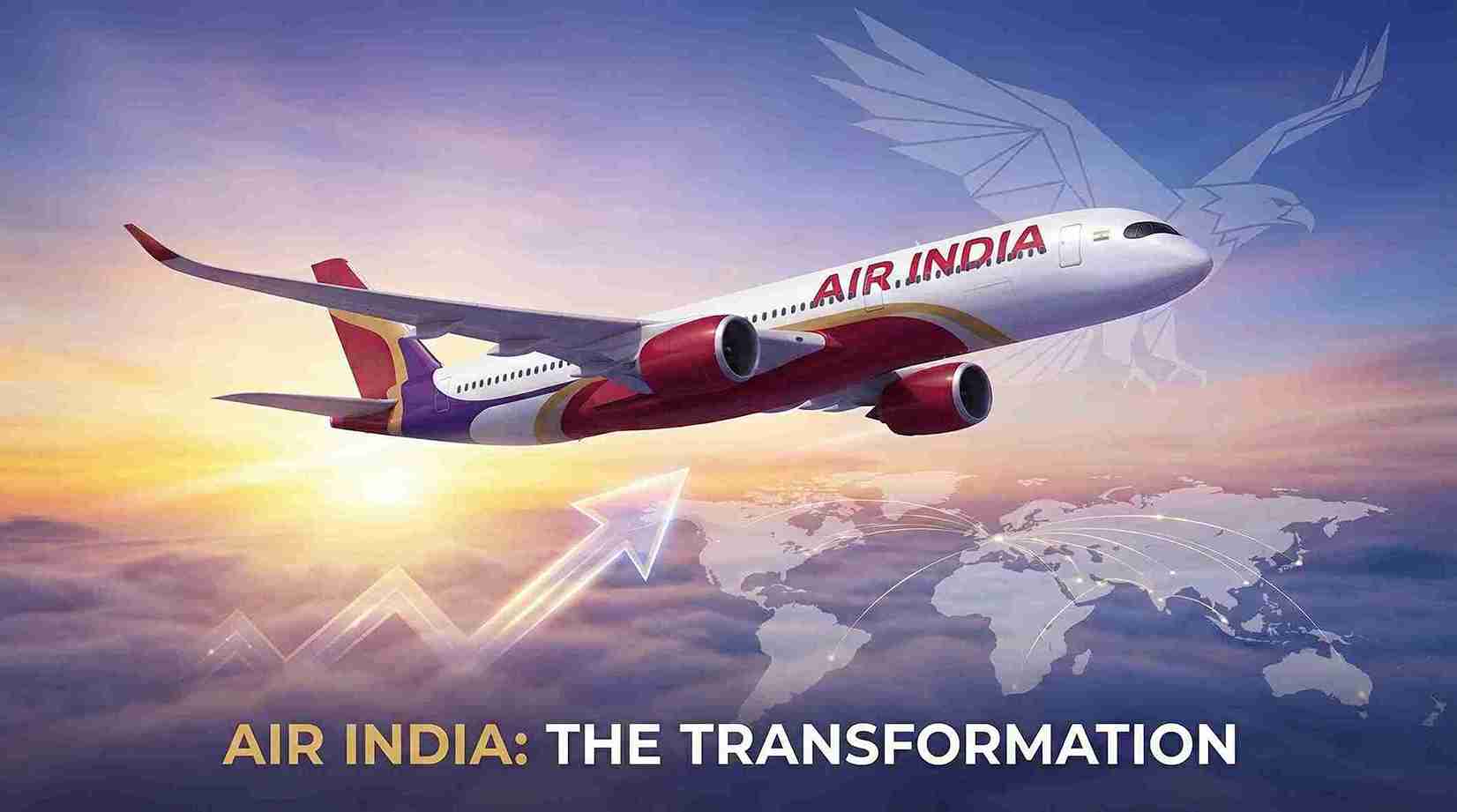
Campbell Wilson and Air India: Charting a Course for a New Era of Aviation Excellence
The Indian aviation landscape is undergoing a monumental shift, and at the heart of this transformation is Air India, now under the stewardship of Tata Sons. Since its homecoming to the Tata Group, the venerable airline has embarked on an ambitious journey of revival, aiming to reclaim its rightful place as a global aviation leader. Central to this audacious endeavor is its CEO, Campbell Wilson, whose leadership is meticulously steering the airline towards a future defined by excellence, innovation, and unparalleled customer service.
Introduction: The Dawn of a New Air India
For decades, Air India, once a symbol of national pride, grappled with operational inefficiencies, financial challenges, and a perception of declining service quality under government ownership. Its return to Tata Sons, the conglomerate that originally founded it in 1932, marked not just a change of ownership but the dawn of a fundamentally new era. This homecoming was met with widespread optimism, signaling a commitment to inject fresh capital, strategic vision, and professional management into the struggling carrier.
From Government to Global Ambition
The transition from a state-owned enterprise to a private entity under one of India's most respected business houses was more than a mere corporate transaction. It represented a national aspiration - to have an airline that truly reflects India's growing economic prowess and global ambitions. The challenge was immense: to overhaul every aspect of the airline, from its aging fleet and infrastructure to its customer service and employee morale.
The Tata Sons Vision
Tata Sons didn't acquire Air India simply for nostalgia; they envision a world-class airline, competitive on the global stage, and a significant player in the booming Indian aviation market. This vision requires not just capital infusion but a complete cultural and operational transformation, spearheaded by experienced leadership. This is where Campbell Wilson steps in, bringing a wealth of international airline experience to the table.
Campbell Wilson: A Visionary Leader at the Helm
When Tata Sons announced Campbell Wilson as the CEO and Managing Director of Air India in May 2022, it sent a clear message: the transformation would be led by a seasoned industry veteran with a proven track record of building successful airlines from the ground up.
A Stellar Track Record
Wilson's career in aviation spans over 26 years, predominantly with the Singapore Airlines (SIA) Group. He notably served as the founding CEO of Scoot, SIA's low-cost subsidiary, transforming it into a successful and profitable airline. His leadership at Scoot demonstrated a keen understanding of market dynamics, operational efficiency, and customer-centric strategies in a highly competitive environment. This experience in developing and scaling an airline from scratch, coupled with his global perspective, made him an ideal candidate for Air India's monumental turnaround.
Why Wilson for Air India?
Tata's choice of Wilson was strategic. They needed someone who could navigate the complexities of a large, legacy carrier while instilling a culture of innovation and efficiency. Wilson's expertise in fleet management, network planning, product development, and customer experience, honed at SIA and Scoot, aligns perfectly with Air India's strategic imperatives. He brings not just operational acumen but also a fresh perspective and a commitment to global best practices, essential for elevating Air India's standing.
Strategic Pillars of Transformation: Fleet, Service & Network
Under Wilson's leadership, Air India's transformation plan, dubbed 'Vihaan.AI', is meticulously structured around five key pillars: customer experience, robust operations, industry-best talent, industry leadership, and commercial efficiency. These pillars are being addressed through concrete, ambitious initiatives.
Unprecedented Fleet Modernization
One of the most visible aspects of Air India's revival is its massive fleet order. In an unprecedented move, Air India announced the acquisition of 470 new aircraft from Airbus and Boeing, marking the largest single aircraft order in commercial aviation history. This includes a mix of wide-body and narrow-body jets designed to modernize its fleet, enhance fuel efficiency, expand capacity, and offer a superior passenger experience. Newer aircraft mean greater reliability, reduced maintenance costs, and a significantly improved cabin product, including updated interiors and in-flight entertainment systems.
Elevating the Customer Experience
Improving customer experience is paramount. Wilson's team is focusing on every touchpoint, from booking and check-in to in-flight service and post-flight support. Initiatives include upgrading lounges, enhancing ground services, digitizing processes, and, crucially, retraining cabin crew and ground staff to deliver world-class hospitality. New menus, better seating, and improved entertainment options are all part of the push to make flying Air India a premium experience once again.
Expanding Global Reach and Connectivity
With its modernized fleet, Air India is set to significantly expand its international and domestic network. The aim is to leverage India's strategic geographical location to establish it as a major global aviation hub. This involves launching new direct routes, increasing frequencies on popular sectors, and strengthening alliances to offer seamless connectivity to passengers worldwide. The goal is to compete directly with leading international carriers that currently dominate long-haul traffic to and from India.
The Vistara Merger: Forging a Unified Powerhouse
A pivotal development in Air India's consolidation strategy is the planned merger with Vistara, another Tata-SIA joint venture. This merger is a game-changer for the Indian aviation market.
Synergies and Strategic Alignment
The integration of Vistara, known for its premium service and operational efficiency, into Air India will create a formidable full-service carrier. The merger will allow for the consolidation of resources, routes, and fleets, eliminating redundancies and leveraging synergies in network planning, sales, and ground operations. This strategic move is expected to enhance Air India's market share, particularly in the domestic full-service segment, and strengthen its competitive position against other carriers.
What it Means for Passengers and the Market
For passengers, the merger promises a more extensive network, greater choice, and potentially more consistent service standards across a larger fleet. While there might be initial integration challenges, the long-term vision is to offer a unified, high-quality product that combines the best aspects of both airlines. The combined entity will have a more robust presence in key hubs, offering better connectivity and a seamless travel experience for both leisure and business travelers.
Impact on Indian Aviation and Global Aspirations
Air India's transformation under Campbell Wilson is not just about one airline; it's set to significantly reshape the broader Indian aviation industry and bolster India's position on the global aviation map.
Reshaping the Competitive Landscape
A revitalized Air India, backed by Tata's financial muscle and Wilson's strategic leadership, will intensify competition across all segments - domestic, short-haul international, and long-haul. Other Indian carriers will be compelled to innovate and upgrade their services to match Air India's renewed offering, ultimately benefiting consumers. This competitive pressure is a catalyst for overall industry improvement.
India's Role as an Aviation Hub
The expansion and modernization of Air India are critical to India's ambition of becoming a leading global aviation hub, challenging established hubs in the Middle East and Southeast Asia. With direct flights to more destinations and improved connectivity, Air India aims to capture a larger share of transit traffic, making Indian airports more attractive for international travelers. This would bring significant economic benefits, including increased tourism, trade, and employment.
Challenges and the Road Ahead
While the vision is clear and the momentum is building, the path to fully realizing Air India's potential is fraught with challenges. The airline is a massive organization with a complex legacy.
Navigating Operational Complexities
Integrating new aircraft, harmonizing different work cultures (especially with the Vistara merger), upgrading legacy IT systems, and managing a vast employee base are immense operational hurdles. Maintaining service consistency during this period of rapid change will be crucial. Furthermore, the global aviation industry remains susceptible to external shocks like fuel price volatility, geopolitical tensions, and economic downturns.
Sustaining Growth and Profitability
The ultimate measure of success will be Air India's ability to achieve sustained profitability while maintaining its newfound service standards. This requires meticulous financial management, effective cost control, and continuous innovation to stay ahead in a fiercely competitive market. Campbell Wilson and his team face the formidable task of balancing aggressive expansion with financial prudence.
Conclusion: Air India's Flight to Future Success
Campbell Wilson's tenure at Air India marks a pivotal chapter in the airline's storied history. With a clear strategic roadmap, massive investments in fleet and service, and the imminent integration of Vistara, Air India is poised for a remarkable resurgence. The journey is long and demanding, but under Wilson's experienced guidance and Tata Sons' unwavering commitment, Air India is not just flying; it's charting a new course towards becoming a beacon of aviation excellence, ready to take its place among the world's leading airlines and truly connect India to the world.