

The question, "Are Venezuelans happy Maduro is gone?" immediately hits a crucial, albeit often misunderstood, point: Nicolás Maduro, for all the international pressure and internal dissent, is still very much the de facto president of Venezuela. This fundamental fact anchors any discussion about public sentiment in the country. Venezuela remains locked in a profound and multifaceted crisis, marked by political instability, economic collapse, and a humanitarian emergency that has triggered one of the largest migrations in recent history. Understanding the nuances of public opinion amidst this turmoil, and the intricate web of international relations--particularly the long-standing conflicts between the U.S. and Venezuela--requires a deep dive into a nation grappling with its present and uncertain future.
This blog post aims to demystify the complex situation in Venezuela, exploring the reality of Maduro's continued rule, the diverse sentiments of its people, and the significant role played by international actors, including the United States. We will navigate the layers of political discourse, economic hardship, and human struggle to provide a comprehensive, clear, and engaging overview for a general audience.
Understanding Venezuela's Complex Reality
Nicolás Maduro's Enduring Grip on Power
Despite widespread international condemnation, accusations of human rights abuses, and calls for his resignation, Nicolás Maduro has remained firmly in power since 2013, succeeding Hugo Chávez. His government has weathered numerous challenges, including massive street protests, an attempted uprising by a segment of the military, and the recognition of an interim government led by opposition leader Juan Guaidó by dozens of countries, including the U.S. However, with the backing of key allies like Russia, China, and Cuba, along with a firm grip on the military and state institutions, Maduro has consolidated his authority. This resilience, often attributed to a combination of loyal security forces, a fragmented opposition, and the strategic use of state resources, makes the question of his departure purely hypothetical in the current climate.
The Socio-Economic Landscape: A Nation in Crisis
Venezuela's economic collapse is unprecedented in recent Latin American history. Once a wealthy oil-producing nation, it now suffers from hyperinflation, widespread shortages of food and medicine, and a crumbling infrastructure. Essential services like electricity, water, and public transportation are severely unreliable. The nation's oil production, the backbone of its economy, has plummeted due to mismanagement, corruption, and international sanctions. This economic devastation has directly fueled the humanitarian crisis, forcing millions of Venezuelans to flee their homes in search of basic necessities and a better life. The ongoing crisis profoundly shapes daily life for those who remain, impacting their perspectives on the government and future prospects.
The Nuance of Public Sentiment: Are Venezuelans 'Happy'?
A Spectrum of Views: Support, Dissent, and Apathy
To ask if Venezuelans are 'happy Maduro is gone' is to miss the current reality. Instead, public sentiment is a complex tapestry woven from desperation, resilience, and a wide range of political beliefs. There is no single, monolithic view. A segment of the population, often those who benefit from government programs or hold ideological allegiance to the Chavista movement, continues to support Maduro. However, a significant majority expresses deep dissatisfaction, frustration, and anger over the economic hardship and lack of political freedom. Many have lost hope in traditional political processes, leading to widespread apathy or a focus on daily survival rather than active political engagement.
Surveys conducted both inside and outside Venezuela, though challenging to carry out accurately due to the political climate, consistently indicate low approval ratings for Maduro's management of the country. Yet, this dissent doesn't automatically translate into a unified or effective opposition movement, which itself has faced criticism for internal divisions and strategic missteps. The desire for change is palpable, but the path to achieving it remains highly contested and unclear.
The Human Cost: Impact of the Humanitarian Crisis on Opinion
The daily struggle for survival profoundly influences Venezuelan public opinion. People are primarily concerned with securing food, water, medicine, and safety. The humanitarian crisis has created a generation traumatized by scarcity and uncertainty. For many, political allegiances take a backseat to the immediate need to provide for their families. This existential pressure often fuels a deep yearning for stability and an end to the crisis, irrespective of who holds power. The exodus of over 7 million Venezuelans, representing a quarter of the population, also means that a substantial portion of the population that might have vocally opposed Maduro is now living abroad, further altering the internal political dynamics.
The Role of International Players: Focus on U.S.-Venezuela Conflicts
U.S. Policy and Sanctions: A Tool of Pressure
The relationship between the United States and Venezuela has been contentious for decades, escalating significantly under the Maduro regime. The U.S. government views Maduro as an illegitimate leader and has pursued a policy of "maximum pressure" aimed at restoring democracy. This policy has largely relied on extensive economic sanctions targeting Venezuela's oil industry, government officials, and financial transactions. The objective of these sanctions is to limit the regime's access to funds and pressure it into democratic concessions.
However, the impact of these sanctions is a subject of intense debate. While proponents argue they are necessary to starve the regime of funds and protect human rights, critics contend they exacerbate the humanitarian crisis, disproportionately harming the Venezuelan population and hindering the delivery of essential goods. These sanctions have undeniably contributed to the country's economic woes, deepening the conflicts between the U.S. and Venezuela, and making any resolution more complex.
Venezuela's Geopolitical Alliances and Regional Dynamics
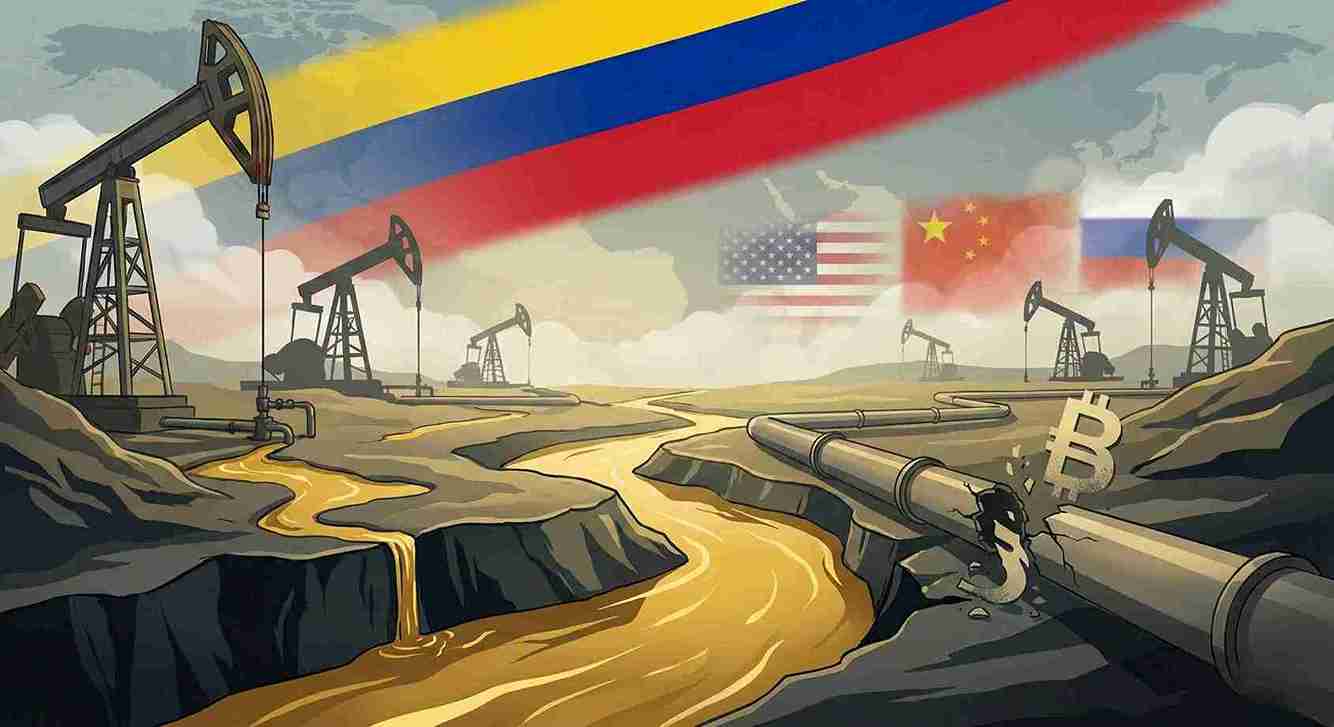
Amidst its conflicts with the U.S. and other Western nations, Venezuela has strengthened alliances with countries like Russia, China, and Iran. These nations provide crucial economic, military, and diplomatic support, helping Maduro circumvent sanctions and maintain his hold on power. Russia, for instance, has significant investments in Venezuela's oil sector and provides military assistance. China is a major creditor and trading partner, while Iran has supplied fuel and technical assistance. These alliances highlight the geopolitical dimensions of the Venezuelan crisis, transforming it from a purely internal matter into a proxy battleground for broader international influence. Regional dynamics in Latin America also play a role, with some neighboring countries supporting a hardline stance against Maduro, while others advocate for more diplomatic engagement.
A Hypothetical Future: What if Maduro Were Gone?
Potential Paths for Venezuela: Transition Scenarios
The hypothetical departure of Nicolás Maduro would undoubtedly open a new, albeit fraught, chapter for Venezuela. There are several potential transition scenarios: a negotiated political settlement, a popular uprising, or even internal military action. A negotiated settlement, ideally brokered by international actors, would likely involve elections, amnesty agreements, and a framework for rebuilding institutions. An uprising or military action, while potentially swift, carries significant risks of further instability, violence, and even civil conflict.
Regardless of the mechanism, the immediate aftermath would be tumultuous. The country would face immense pressure to establish a legitimate interim government, restore order, and begin the monumental task of economic and social recovery. International aid would be crucial, but so would the will of Venezuelan political actors to unite for the common good.
Challenges of Transition: Stability, Economy, and Reconciliation
Even with a change in leadership, Venezuela would confront colossal challenges. Ensuring political stability would be paramount, as various factions vie for power and influence. The economy would require massive international investment, restructuring, and a clear plan to combat hyperinflation and rebuild industries. Social reconciliation would be equally vital, as years of polarization, political persecution, and deep societal divisions have left profound scars. Addressing the humanitarian crisis, repatriating migrants, and rebuilding trust in institutions would be long-term endeavors requiring immense political will and sustained international support. The path to a truly 'happy' Venezuela, even without Maduro, would be arduous and complex.
The Path Forward: Hope Amidst Enduring Challenges
The Role of Dialogue and Diplomacy
Many international observers and Venezuelans believe that a peaceful and sustainable resolution to the crisis will ultimately require dialogue and diplomacy. Past attempts at negotiation have faltered, but renewed efforts, perhaps with more robust international mediation, could offer a way forward. Any successful dialogue would need to address core issues such as free and fair elections, human rights, and a plan for economic recovery. The U.S. and other nations could play a constructive role by facilitating such talks and signaling a willingness to ease sanctions in exchange for concrete democratic steps.
The Future of the Venezuelan People: Resilience and Aspirations
Despite the overwhelming challenges, the Venezuelan people continue to demonstrate remarkable resilience. From those struggling daily to put food on the table to the vast diaspora rebuilding their lives abroad, there is a deep aspiration for a peaceful, prosperous, and democratic future. The desire for an end to the political stalemate and economic hardship transcends partisan lines. While the question of whether Venezuelans are 'happy Maduro is gone' remains a hypothetical one, the prevailing sentiment is a profound longing for change, stability, and the restoration of dignity for their nation. The eyes of the world remain on Venezuela, hoping for a resolution that will allow its people to finally embark on a path to healing and rebuilding.