

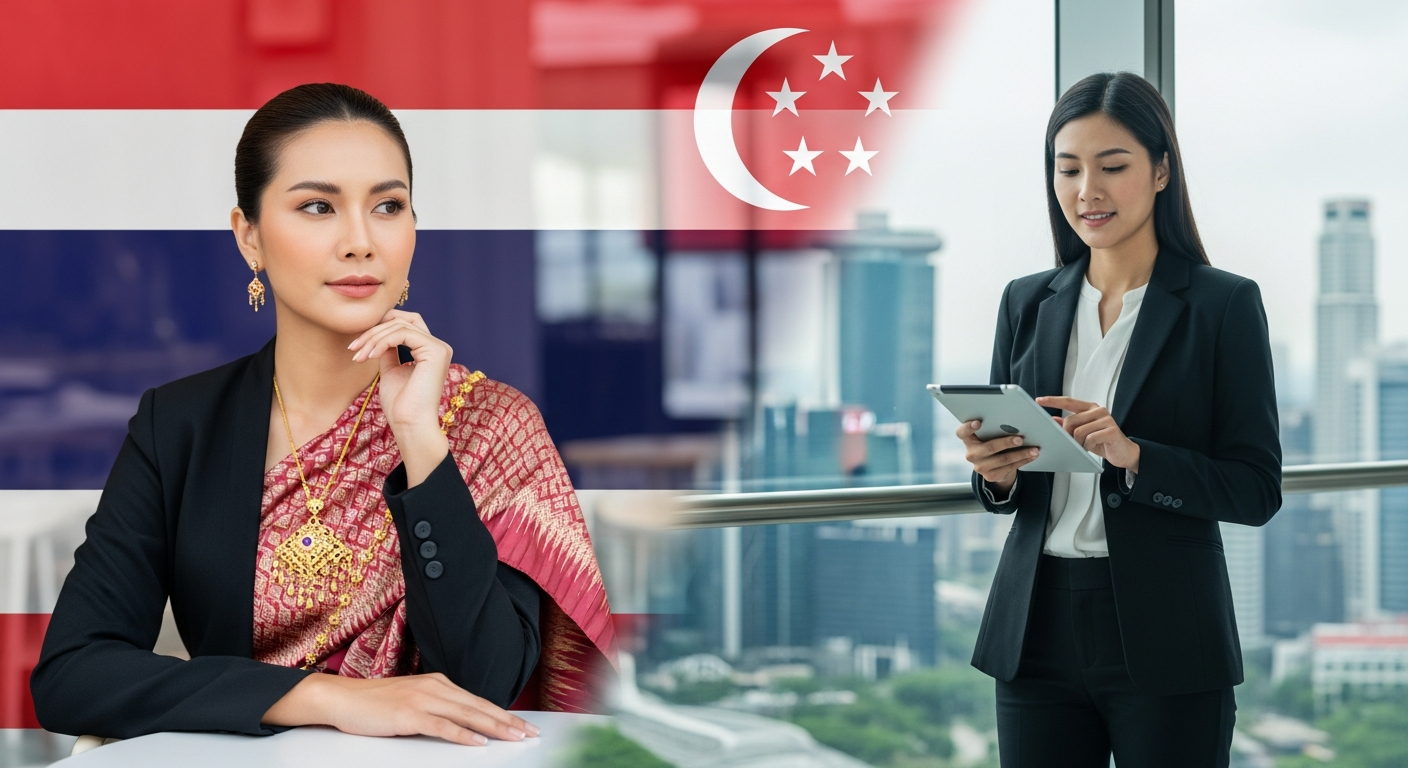
Southeast Asia is a region of immense diversity, home to nations that, despite their geographical proximity, offer unique societal landscapes. Among these, Thailand and Singapore stand out as fascinating case studies, particularly when examining the evolving roles of women in modern society. This article delves into a compelling comparison: Thailand vs Singapore women, exploring their lifestyles, career trajectories, and the dynamic marriage trends Thailand vs Singapore women navigate in the 21st century.
Introduction: A Tale of Two Nations, Two Societies
Thailand, a kingdom steeped in centuries of rich culture, vibrant traditions, and a predominantly Buddhist heritage, presents a societal fabric often perceived as more fluid and community-oriented. In contrast, Singapore, a bustling city-state, is a beacon of modernity, efficiency, and multiculturalism, built on meritocracy and a global outlook. These fundamental differences significantly shape the experiences and expectations for women in each nation.
Setting the Stage: Thailand's Rich Heritage vs. Singapore's Urban Dynamism
For Thai women, life often involves a delicate balance between deeply rooted family values and an increasingly globalized world. Traditional roles, while still present, are continually reinterpreted. For Singapore women, navigating a highly competitive and structured environment means a focus on education, career advancement, and a drive for personal achievement, often within a densely populated urban setting.
Economic Empowerment and Career Landscape
The economic landscape offers a stark comparison in opportunities and challenges for women.
Professional Trajectories: Opportunities and Challenges
In Singapore, women benefit from a robust education system and strong governmental support for gender equality in the workplace. Many Singapore women achieve high levels of education and are prominent in professional sectors, including STEM fields and leadership roles. The emphasis is on skill development and merit, leading to high female labor force participation rates in corporate and specialized industries. However, this also comes with intense pressure to excel in a highly competitive job market.
In Thailand, women have historically played significant roles in the economy, particularly in entrepreneurship, agriculture, and the informal sector. Today, Thai women are increasingly entering formal employment, education, and even politics. While opportunities are growing, challenges such as pay gaps, limited access to top corporate positions, and the prevalence of traditional expectations in some industries still exist. However, their strong entrepreneurial spirit allows many to carve out successful careers on their own terms.
Work-Life Balance: A Modern Pursuit
The pursuit of work-life balance is a universal challenge, but its expression differs for Thai women vs Singapore women lifestyle. Singaporean women often grapple with the demands of a high-pressure career and the societal expectation to maintain a family, leading to extensive support systems for childcare but also significant stress. Thai women, while facing their own pressures, might find more flexibility within a less rigid corporate structure, though balancing work with extended family obligations remains crucial.
Lifestyle and Societal Expectations
The daily lives and societal pressures on women in these two nations reflect their distinct cultural tapestries.
Cultural Nuances: Daily Lives of Thai Women vs. Singapore Women
The Thai women lifestyle is often characterized by a strong emphasis on community, respect for elders, and a deep connection to Buddhist values. Social gatherings, religious festivals, and family-centric activities are integral. While modern influences are strong, particularly in urban centers, a graceful demeanor and an appreciation for traditional arts and crafts remain prevalent.
The Singapore women lifestyle, conversely, is deeply intertwined with urban living, efficiency, and multiculturalism. Daily life often revolves around work, personal development, and navigating a fast-paced environment. There's a strong emphasis on global awareness, technological adoption, and a pragmatic approach to life. Social circles are diverse, reflecting the nation's multi-ethnic composition.
Balancing Tradition and Modernity
Both groups of women are adept at balancing tradition with modernity. Thai women integrate modern fashion and technology while upholding cultural courtesies and family duties. Singaporean women embrace global trends and a meritocratic ethos while often maintaining aspects of their specific ethnic heritage, be it Chinese, Malay, or Indian traditions.
Marriage Trends and Family Dynamics
Shifts in societal values, education, and economic independence have profoundly impacted marriage trends Thailand vs Singapore women.
Evolving Partnerships: Marriage in Thailand vs. Singapore
In Singapore, there's a clear trend towards later marriages, with many women prioritizing education and career before settling down. Increasing rates of singlehood and declining fertility rates reflect the challenges of balancing professional aspirations with family formation in an expensive city. The idea of marriage is often viewed through a lens of partnership and shared responsibilities, moving away from purely traditional gender roles.
Thailand also experiences similar trends of later marriages, albeit with cultural nuances. While the concept of family remains central, more Thai women are delaying marriage or choosing not to marry at all, driven by educational pursuits and greater financial independence. Divorce rates have seen an increase, indicating a greater willingness to end unfulfilling unions. However, the cultural expectation of marriage and starting a family can still be quite strong, particularly outside major urban centers.
Family Values and Intergenerational Shifts
For both Thai women vs Singapore women, family remains a cornerstone of society. However, family dynamics are evolving. In Singapore, smaller nuclear families are common, with grandparents often playing a crucial role in childcare. In Thailand, extended family networks often provide extensive support, though migration to urban areas is shifting this dynamic. Intergenerational dialogues are essential as younger women navigate modern choices that might diverge from their elders' paths.
Conclusion: Diverse Paths, Shared Aspirations
The comparison between Thailand vs Singapore women reveals two distinct yet equally dynamic narratives of female empowerment and societal evolution. While the Thai women vs Singapore women lifestyle, career opportunities, and marriage trends Thailand vs Singapore women experience are shaped by unique cultural, economic, and political landscapes, both groups share a common thread: the pursuit of agency, fulfillment, and a meaningful life. From the bustling streets of Bangkok to the futuristic skyline of Singapore, women in these nations are not just adapting to modernity; they are actively shaping its very definition, forging paths that honor their heritage while embracing the future.